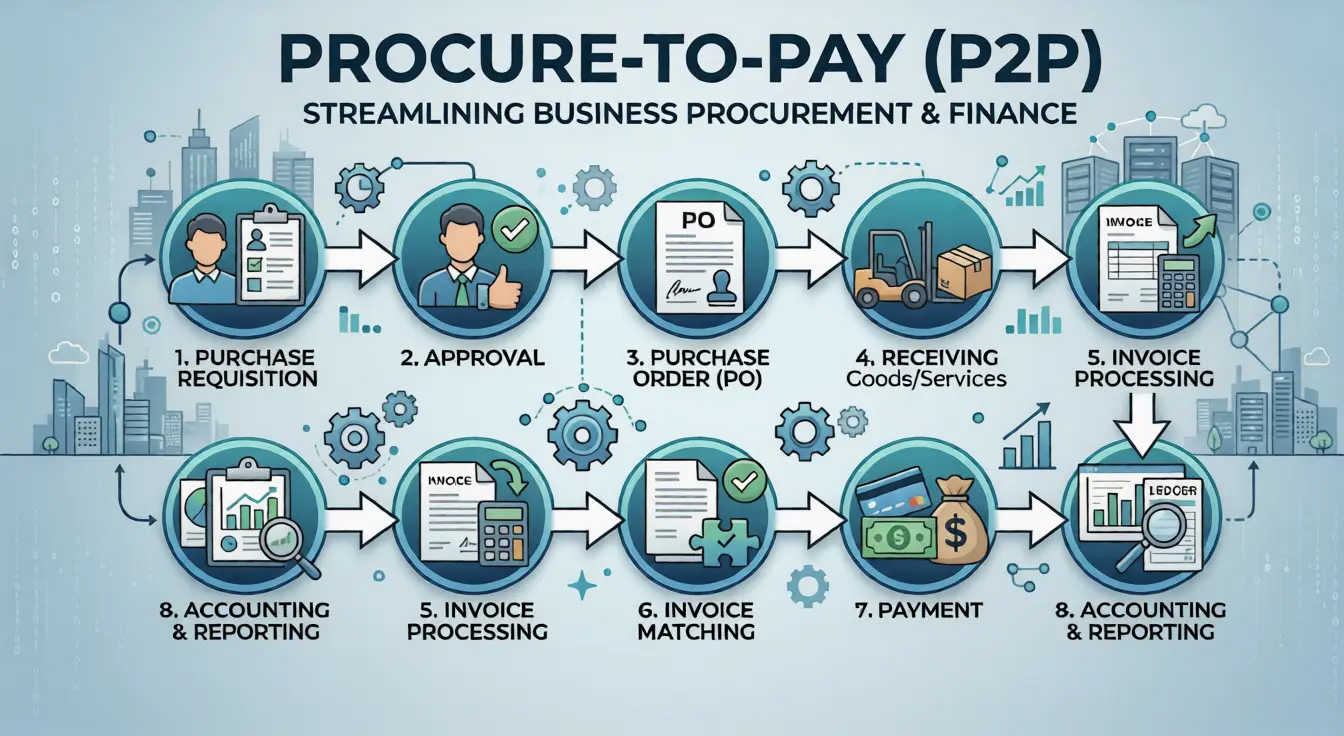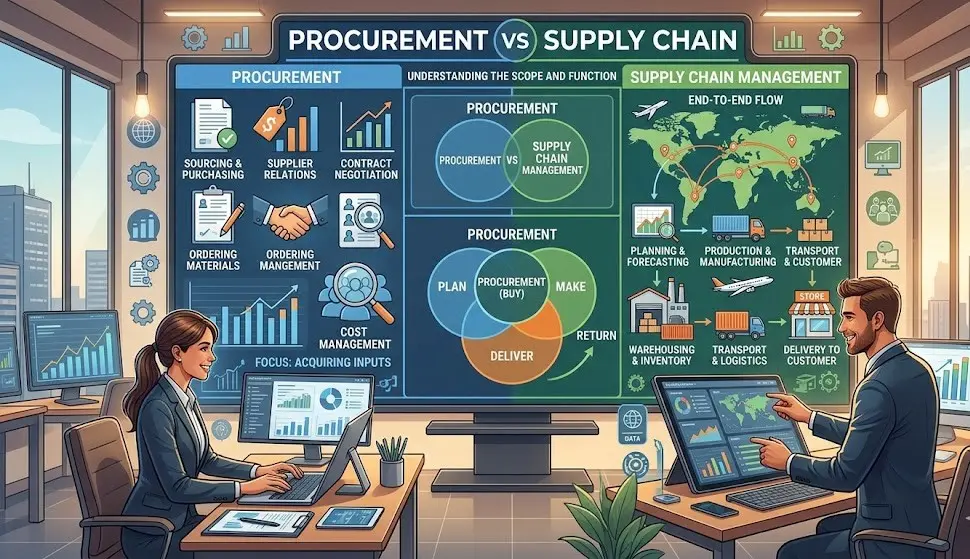
An AI-powered ERP is an enterprise resource planning system in which AI agents execute transactional work inside the core application, not through a bolted-on chat window. Three tests separate a genuinely AI-powered ERP from a marketing label.
- Can you talk to the system in plain English and get something done rather than just pull a report?
- Do specialized agents work inside the finance, procurement, and supply chain modules where your team burns the most hours, and do those agents respect your existing approval matrix and permissions?
- Does the AI live inside the product itself, rather than syncing overnight through a third-party connector that turns “AI-powered” into “AI-adjacent”?
Very few vendors clear all three bars in 2026. Most check one box, maybe two, and cover the rest with roadmap slides. The five platforms below are the ones that ship real agentic execution today, ranked by depth of AI-driven task execution, deployment practicality, and analyst validation.
Quick Overview Of Top 5 AI-Powered ERP Systems in 2026
Here’s a quick procurement-first comparison of SAP Joule, Priority aiERP, Microsoft Dynamics 365 Copilot, Oracle NetSuite Next, and Epicor Prism with pricing, agent counts, and rollout timelines current as of August 2026.
| Rank | ERP Platform | AI Engine | Best Fit | Entry Pricing |
| 1 | SAP S/4HANA | Joule | Large enterprises on SAP | TCO exceeds $1M (mid-market) |
| 2 | Priority Software | aiERP Companion | Mid-sized businesses | Quote-based, standard product |
| 3 | Microsoft Dynamics 365 | Copilot | Microsoft-stack organizations | $70/user/month (Business Central) |
| 4 | Oracle NetSuite | NetSuite Next | Growing, multi-entity businesses | $999/month + $99/user/month |
| 5 | Epicor Kinetic | Prism | Distribution & supply chain | $80/user/month |
1. SAP S/4HANA with Joule: Which ERP Has the Deepest Agent Network in 2026?
SAP S/4HANA with Joule has the deepest AI agent network of any ERP in 2026, running over 200 specialized agents and more than 50 Joule Assistants across finance, supply chain, HR, procurement, and customer experience. SAP announced this expansion at Sapphire 2026 in Orlando, more than quintupling the agent count it reported in early 2026, when Joule ran roughly 40 agents and 2,400 Joule Skills.
Joule launched in 2023 as a generative AI copilot layered onto S/4HANA. By Sapphire 2026, SAP CEO Christian Klein reframed the platform as the “Autonomous Enterprise.” Joule Studio 2.0 became generally available as a low-code, intent-based agent builder on SAP’s Business Technology Platform, and it ships free of charge to partners. SAP also committed €100 million in partner funding at Sapphire 2026 to accelerate agent development across its ecosystem.
What Makes SAP’s Agent Architecture Different?
SAP’s Knowledge Graph gives Joule agents structured business context that a standalone large language model cannot replicate. The graph encodes 452,000 tables and 7.3 million fields of SAP’s ERP domain, and SAP’s own engineers describe it as a semantic representation of data structures, APIs, and database tables that every Joule capability draws on.
This context layer is what lets a Joule agent distinguish a purchase order from a blanket agreement, or connect FI-CO postings to accounts receivable aging, without hallucinating a plausible-sounding but wrong answer.
- Cross-system orchestration: Joule agents communicate through an Agent-to-Agent (A2A) protocol, so a finance dispute agent can trigger a logistics agent in a separate, non-SAP system to pull delivery proof.
- Autonomous Close Assistant: handles journal entries, reconciliations, and error resolution, with the goal of compressing month-end close from weeks to days.
- Autonomous HCM: automates payroll, recruiting, workforce planning, and org modeling across the employee lifecycle.
- SAP AI Agent Hub: centralizes governance and monitoring for every deployed agent and, according to SAP, can accelerate multi-step workflows by up to 75%.
What Does SAP Joule Cost, and Who Should Buy It?
SAP S/4HANA with Joule fits large enterprises that already operate at SAP scale and can absorb a seven-figure implementation.
Total cost of ownership crosses $1 million for mid-market deployments and climbs further at enterprise scale, with implementation timelines running 12 to 36 months. SAP is also pushing ECC customers toward S/4HANA before mainstream ECC support ends on December 31, 2027.
| Procurement takeaway
If your organization already runs SAP at enterprise scale, Joule has no real rival on agent depth or cross-system reach. If you’re mid-sized and price-sensitive, the next platform on this list delivers comparable transactional AI at a fraction of the cost and timeline. Pro Procurement’s sourcing specialists can help you model the true five-year cost of an S/4HANA migration before you sign; start with our procurement consulting services. |
2. Priority Software aiERP
Priority Software aiERP is the strongest AI-powered ERP for mid-sized businesses in 2026, because it embeds production-ready AI agents directly into finance, sales, and supply chain workflows as part of the standard product, without requiring a six-figure consulting engagement.
Priority earns second place on this list by putting the widest range of AI execution into mid-market hands at a cost and deployment timeline that neither SAP nor Microsoft matches at that segment.
What Is the aiERP Companion?
The aiERP Companion is Priority’s natural-language interface, embedded inside the ERP, that routes user questions, instructions, and approvals to specialized AI agents working across finance, sales, and supply chain. Priority Software announced the Companion on May 20, 2026, alongside the release of Priority ERP V26.0 (built around the aiERP Companion). They described it as the next phase of the embedded AI strategy the company introduced with aiERP in June 2025.
For procurement and supply chain teams specifically, this matters because the Companion’s agents don’t just summarize data. On the contrary, they act on it, inside the same audit trails, approval gates, and role-based permissions your team already governs by. Buyers evaluating platforms for their own operations can compare this embedded-agent model against Pro Procurement’s own approach to vendor management and sourcing to see where AI-driven execution should (and shouldn’t) replace human sign-off.
What Do Priority’s AI Agents Actually Do?
- Finance agents: create journal entries, post receipts, assist invoice processing, and run reconciliations across bank accounts, ledger accounts, and credit cards.
- Purchasing agents: set up new vendors and products, generate purchase orders, run inventory checks, and produce demand forecasts that supply chain teams previously built by hand in spreadsheets.
- Analytics: V26.0 shipped AI-assisted chart and report creation alongside descriptive analytics that interpret what the numbers mean rather than just displaying them.
- Governance: Every agent action runs through existing audit trails, approval gates, business rules, and role-based access controls.
How Is Priority Software Rated by Analysts?
IDC named Priority a Major Player in its 2025 Worldwide AI-Enabled Midsize Business ERP Applications assessment and called Priority’s AI strategy well thought out. TEC ranked Priority the top ERP for SMBs in 2025. Gartner included Priority in its 2024 Magic Quadrant for Cloud ERP for Product-Centric Enterprises. Priority serves 75,000 customers across 70 countries as of 2026, with offices in the United States, United Kingdom, Belgium, and Israel.
One caution worth flagging for procurement buyers: independent reviewers note that Priority’s North American install base and partner network remain smaller than its presence in Israel and Europe, so US-based buyers should pressure-test local implementation support before signing.
| Metric | SAP S/4HANA + Joule | Priority aiERP |
| Specialized AI agents | 200+ | Multiple, embedded across finance/sales/supply chain |
| Deployment timeline | 12–36 months | Weeks to a few months (standard SaaS onboarding) |
| AI cost model | Included in RISE with SAP 2025 | Standard product, no premium AI add-on |
| Ideal company size | Large enterprise | $10M–$500M revenue |
| Analyst recognition | N/A in this list | IDC Major Player, Gartner MQ, TEC #1 SMB ERP (2025) |
3. Microsoft Dynamics 365 with Copilot: Best for Microsoft-Native Organizations

Microsoft Dynamics 365 with Copilot delivers the least implementation friction of any platform on this list for companies already standardized on Microsoft infrastructure, because the ERP connects natively to Power BI, Azure, Teams, and Outlook without custom integration work. That native connectivity is the platform’s central selling point, and it compounds across every department already living inside the Microsoft ecosystem.
How Fast Does Copilot Actually Make ERP Workflows?
Microsoft reports up to 50% faster invoice processing and 25% to 30% faster period-end close in fully deployed Copilot environments, according to Microsoft’s Finance AI Impact Report. Those figures come with an important caveat: most organizations run at only 40% to 60% deployment maturity, so actual gains in practice tend to be smaller and depend heavily on data readiness.
Wave 1 2026 added a Payflow Agent for automated payment processing and partner-built agents for lease accounting, and Microsoft’s rebuilt Account Reconciliation Agent turns subledger-to-ledger reconciliation into a continuous, exception-based process rather than a once-a-month scramble.
Where Does Copilot Fall Short of Priority or SAP?
Dynamics 365 lags behind Priority in the depth of AI execution inside transactional workflows. Copilot drafts and summarizes reliably, and its agent capabilities keep expanding release over release, but how much transactional work the agents actually execute still depends heavily on which module you’re working in. Several advanced manufacturing scenarios still push buyers toward third-party ISV add-ons in the Microsoft AppSource marketplace instead of native capability.
- Native integration: deepest hooks into Power BI, Azure, Teams, and Outlook of any platform on this list.
- Copilot Studio: lets internal teams build custom agents on the platform without SAP-level developer investment.
- Agentic manufacturing: the Hannover Messe 2026 demo showed agentic ERP running demand planning, production scheduling, and fulfillment decisions across a manufacturing value chain.
- Gartner forecast: 40% of enterprise applications will include task-specific AI agents by the end of 2026, up from under 5% in 2025.
Business Central starts at $70 per user per month. Supply Chain Management runs $180 per user per month. Neither price includes the AI-heavy Copilot for Finance add-ons that unlock the invoice-processing and close-time gains above, so procurement teams should request the fully loaded quote before comparing this line item against Priority or Epicor.
4. Oracle NetSuite with NetSuite Next: Best for Financial Complexity and Growth
Oracle NetSuite with NetSuite Next suits growing, multi-entity businesses where financial consolidation complexity (not raw transaction volume) is the hardest procurement and finance problem to solve. Oracle previewed NetSuite Next at SuiteWorld 2025 and called it the biggest technological leap in the platform’s history. The full North American rollout began around mid-2026, with other regions following through the remainder of 2026 and into 2027.
What’s Included in NetSuite Next?
- Ask Oracle: a conversational intelligence layer that handles natural-language queries over live NetSuite data; a finance team can ask for overdue invoices over $10,000 segmented by region without writing a saved search first.
- AI Canvas: a collaborative workspace where finance teams run scenario planning directly against live ERP data, instead of exporting to a separate planning tool.
- Agentic workflows: cover payment proposals, vendor selection, reconciliations, and supply chain operations, with configurable autonomy levels per workflow.
- Intelligent Close Manager and AI bank matching: added at SuiteConnect 2026, alongside EPM agents, Customer 360 summaries, and a Developer Assistant.
Is NetSuite Next Fully Available Yet?
No, NetSuite Next remains mid-rollout as of mid-2026, which means its agentic capabilities are newer and less battle-tested in production than what Priority, SAP, and Microsoft already ship at scale. Some of the most impressive features shown at Oracle’s conferences are not yet available to every customer. Procurement teams evaluating NetSuite should pressure-test what is actually live today in a sandbox environment against what Oracle is still rolling out on its published timeline, rather than buying against a roadmap slide.
Pricing starts at $999 a month plus $99 per user per month, positioning NetSuite between Priority’s mid-market model and SAP’s enterprise-scale investment.
5. Epicor Kinetic with Prism: Best for Distribution and Supply Chain Execution
Epicor Kinetic with Prism is the most operationally focused AI stack on this list, purpose-built for supply chain, distribution, and production workflows rather than spanning finance, HR, and analytics under one roof. Epicor introduced its expanded Agentic AI Stack at Epicor Insights 2026, adding Epicor Lux as a governance and design layer and the Prism Agent Foundry as a guided workspace for building custom agents.
How Does Epicor’s Three-Layer Architecture Work?
- Epicor Lux: handles governance, security, and consistent user experience across every agent built on Prism.
- Prism agents: execute the actual tasks inside Kinetic including supplier communications, RFQ processing, MRP log interpretation, and more.
- Prism Agent Foundry: a guided, low-code workspace letting customers and partners build vertical-specific agents from their own data.
What Are the Trade-Offs of Choosing Epicor Prism?
Prism is narrower in scope than Priority or SAP, since its agents concentrate on supply chain and operational scenarios rather than spanning finance and HR as well. Buyers who need AI executing work across every department will find broader coverage elsewhere on this list. Where Epicor pulls ahead is with businesses running complex supplier networks, distribution logistics, and production operations.
Kinetic 2026.100 moved to monthly releases and retired the classic desktop client, pushing all users onto the browser UI. The same release separated SHOPLOAD from MRP scheduling runs, giving planners finer control over scheduling. Pricing runs $80 per user per month. Epicor is winding down on-premise support, with version 2028.1 set as the final on-premise release across Kinetic, Prophet 21, and Eclipse.
Top 5 AI-Powered ERP Systems in 2026: Full Comparison Table
The table below compares all five platforms on the criteria that matter most to a procurement or finance buyer: AI depth, pricing, deployment timeline, and ideal company profile.
| ERP | AI Engine | Agent Depth | Pricing (2026) | Deployment Time | Best For |
| SAP S/4HANA | Joule | 200+ agents, 50+ Assistants | TCO $1M+ (mid-market) | 12–36 months | Large enterprise |
| Priority Software | aiERP Companion | Embedded finance/sales/SC agents | Standard product, quote-based | Weeks–months | Mid-market ($10M–$500M) |
| Microsoft Dynamics 365 | Copilot | Growing agent set, module-dependent | $70–$180/user/mo | Varies by scope | Microsoft-stack orgs |
| Oracle NetSuite | NetSuite Next | Agentic workflows, mid-rollout | $999/mo + $99/user/mo | Rolling out through 2027 | Multi-entity, high-growth |
| Epicor Kinetic | Prism | Supply-chain-focused agents | $80/user/mo (+ outcome pricing) | Varies; monthly release cadence | Distribution & manufacturing |
How Should Procurement Teams Choose an AI-Powered ERP?
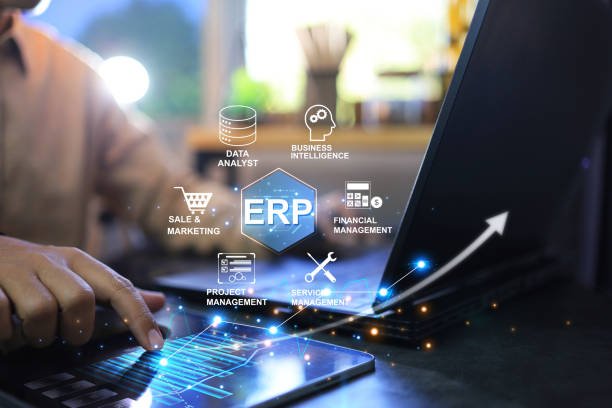
Choose an AI-powered ERP by weighing two factors together: how deep the AI needs to reach into daily workflows, and what your five-year budget supports once implementation, training, integrations, and ongoing support are added to the license fee. A platform that looks affordable on a per-user rate card can still be the most expensive option once a 24-month implementation and a specialist consulting team are factored in.
Which AI-Powered ERP Fits Your Company Size?
- Large enterprises: SAP S/4HANA with Joule, for organizations that already operate at SAP scale and can absorb a seven-figure, multi-year investment in exchange for the deepest agent-to-agent orchestration on the market.
- Mid-sized businesses: Priority Software aiERP, for companies that want production-ready AI execution across finance and supply chain without a dedicated AI team or a six-figure consulting engagement.
- Microsoft-first organizations: Dynamics 365 with Copilot, for companies whose existing Microsoft 365 investment makes native integration worth more than best-in-class AI depth.
- High-growth, multi-entity businesses: NetSuite with NetSuite Next, for companies whose hardest problem is financial consolidation rather than transactional AI depth.
- Distribution and supply chain operators: Epicor Kinetic with Prism, for businesses running complex supplier networks and production scheduling that need AI executing inside operational workflows specifically.
None of these platforms replace the sourcing discipline procurement teams still need before signing a multi-year ERP contract. Pro Procurement helps organizations run structured RFPs, benchmark total cost of ownership across vendors, and negotiate implementation terms before committing budget to any of the five systems above. Visit Pro Procurement to see how our sourcing team supports ERP selection projects from shortlist to contract signature.
Frequently Asked Questions About AI-Powered ERP Systems
What is the difference between an AI-powered ERP and a traditional ERP with a chatbot?
An AI-powered ERP executes tasks (journal entries, purchase orders, vendor onboarding) through agents embedded in the core system, while a traditional ERP with a chatbot only answers questions or generates text without taking action inside the platform. The test is whether the AI can complete a transaction within your approval matrix, not whether it can summarize a report.
Which AI-Powered ERP is best for small and mid-sized businesses in 2026?
Priority Software aiERP is the best AI-powered ERP for mid-sized businesses in 2026, because its aiERP Companion and specialized agents ship as part of the standard product across finance, sales, and supply chain, without requiring the multi-year implementation SAP or the per-module ISV add-ons Microsoft sometimes requires.
How much does an AI-powered ERP cost in 2026?
AI-powered ERP costs range from roughly $80 per user per month for Epicor Kinetic with Prism to over $1 million in total cost of ownership for a mid-market SAP S/4HANA deployment with Joule. Microsoft Dynamics 365 Business Central starts at $70 per user per month, and Oracle NetSuite starts at $999 per month plus $99 per user per month. Final cost depends heavily on implementation scope, module count, and AI add-on tiers.
When does SAP ECC support end, and does that affect ERP AI decisions?
SAP mainstream support for ECC ends on December 31, 2027, which means organizations still running ECC must plan a migration to S/4HANA regardless of their AI strategy. Procurement teams in this position should factor the migration timeline into any AI-powered ERP decision, since SAP is actively incentivizing early movers with AI feature access on legacy systems for customers already committed to the cloud transition.
Conclusion: Matching AI-Powered ERP Investment to Business Reality
The five platforms compared here represent five different bets on how deep AI should reach into ERP workflows. None of these bets is universally correct. The right choice depends on company size, existing technology stack, and the specific workflows draining the most hours from your finance and procurement teams today.
What holds true across all five platforms is this: agent counts and roadmap slides matter less than whether the AI can execute a real transaction, inside your approval controls, on the day you go live.
Pro Procurement helps organizations pressure-test that gap before committing a budget. Explore our procurement advisory services to start an evidence-based ERP evaluation for your business.