There is one thing that every expanding company faces: trying to manage its expenditure without reducing the business rate. Teams require supplies, equipment, services, and software to ensure that work flows. Yet uncontrolled buying results in budget leakages, duplication of orders, and confusion in approvals.
There is no doubt that a purchase requisition is critical. It provides your organization with an organized manner in which you can request purchases before money is committed. You do not just leave it to chance purchases. But you develop a definite process that links employees, departmental heads, and procurement teams under a single approval system.
By reading this guide, you will be aware of what requisitions are, how it works and why it plays an important role in ensuring that procurement errors are minimized. You will also get to know how a purchase requisition process functions, the distinction between a purchase requisition process and a purchase order and how a formal requisition workflow improves cost control, accountability and vendor control.
To have cleaner budgets, faster approvals and smarter decisions regarding purchasing, the initial thing is to learn to master requisitions in your company.
What Is a Purchase Requisition?
A purchase requisition is an in-house document or online request that an employee makes to obtain permission to purchase goods or services. It is the initial formal process in the procurement process, well before the firm reaches out to a supplier or makes a purchase order.
Consider it a guided request that provides an easy answer: Can we afford to buy this, and is it within the budget?
The most important information that a purchase requisition contains is the description of the item, its quantity, the vendor of choice where applicable, its approximate price, the delivery schedule and the department to which the item is being requested. This data assists the procurement teams and managers in determining whether the request is a business need and complies with financial planning.
A purchase request, unlike informal e-mails or oral requests, provides a paper trail that facilitates accountability. It can also assist companies to monitor expenditure trends, eliminate unauthorized purchases and order incorrect materials.
Concisely, by knowing what requisitions are, teams will cease to regard purchasing as a swift operation and begin to regard it as a business process. A powerful requisition system keeps your budget safe, enhances transparency and makes sure that each purchase is connected to a true operational necessity.
The Step-by-Step Purchase Requisition Process
A clear purchase requisition process assists companies in controlling purchasing expenses, minimizing purchasing delays and confusion of approval. When you do things in the right way, all requests flow through an established work process and are not based on guesswork or hasty judgments.
The following is the mechanism of a real-life business:
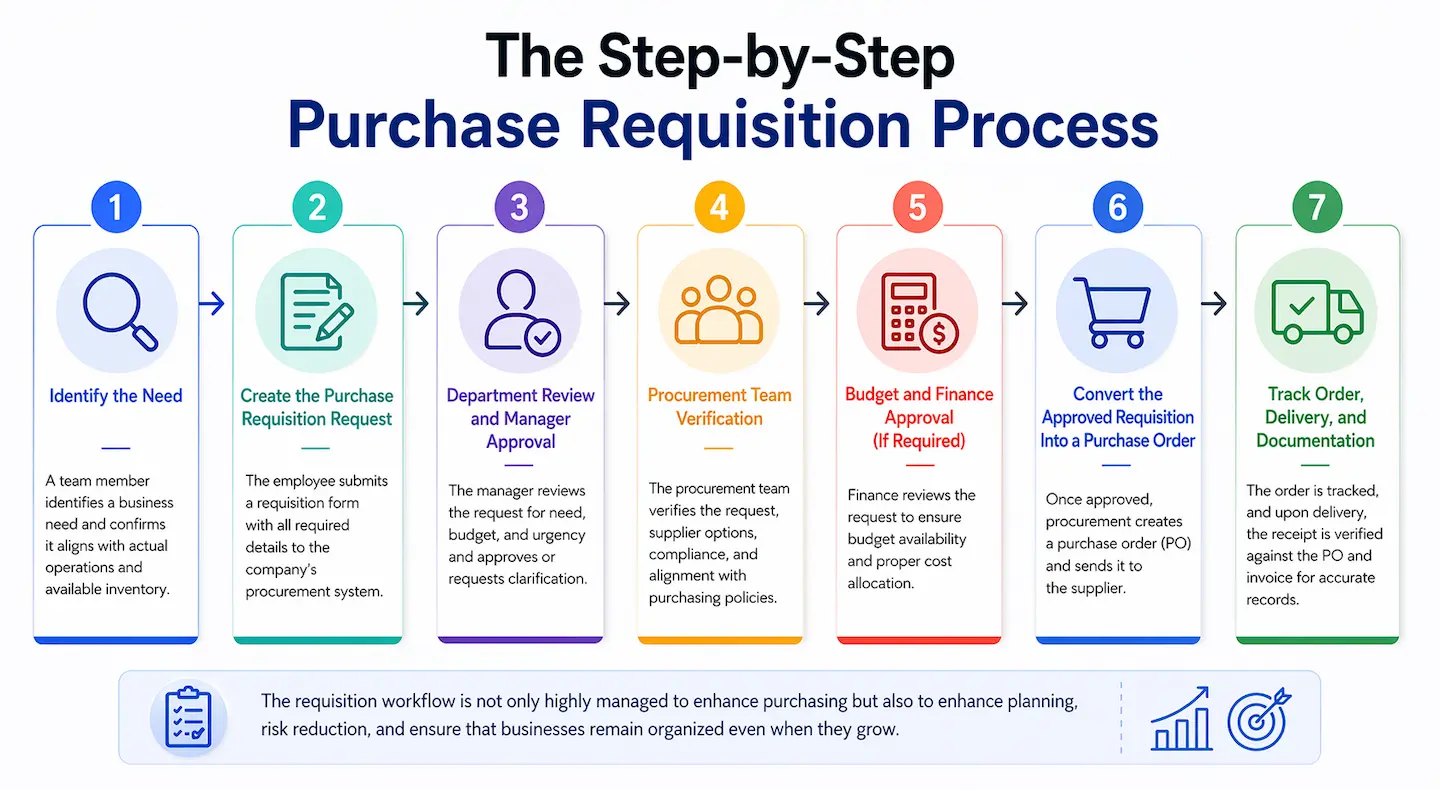
1. Identify the Need
The process starts with a member of the team identifying a business need. This may involve office supplies, building materials, IT equipment, maintenance services or software subscription. The requester must ensure that they have a need, that they have checked the available inventory and that the purchase is in accordance with actual operations.
2. Create the Purchase Requisition Request
The employee places a purchase requisition process form within the procurement system of the company. A good requisition contains:
- Item name and specifications
- Quantity required
- Required delivery date
- Estimated budget or price range
- Department name and cost code
- Preferred supplier (optional)
- Justification for the request
Strong details reduce delays and speed up approvals.
3. Department Review and Manager Approval
The requisition is then sent to a department head or supervisor once it is received. The manager authenticates the request on the basis of need, budget, and urgency. If the request appears vague or unnecessary, the manager can dismiss it or ask them to clarify it.
This will help avoid excessive spending and will do away with unnecessary buying.
4. Procurement Team Verification
After the manager has approved the requisition, it is reviewed by the procurement team. They justify and negotiate suppliers’ selection, compliance regulations and ensure that the request is within the company’s purchasing policies.
This is to safeguard the business against vendor fraud, duplicate orders and unauthorized buying.
5. Budget and Finance Approval (If Required)
Most companies engage finance departments in bigger purchases. Finance checks provide funds, check the appropriate cost allocation and ensure the purchase is matched with department budgets.
This phase enhances the financial control and accuracy in forecasting.
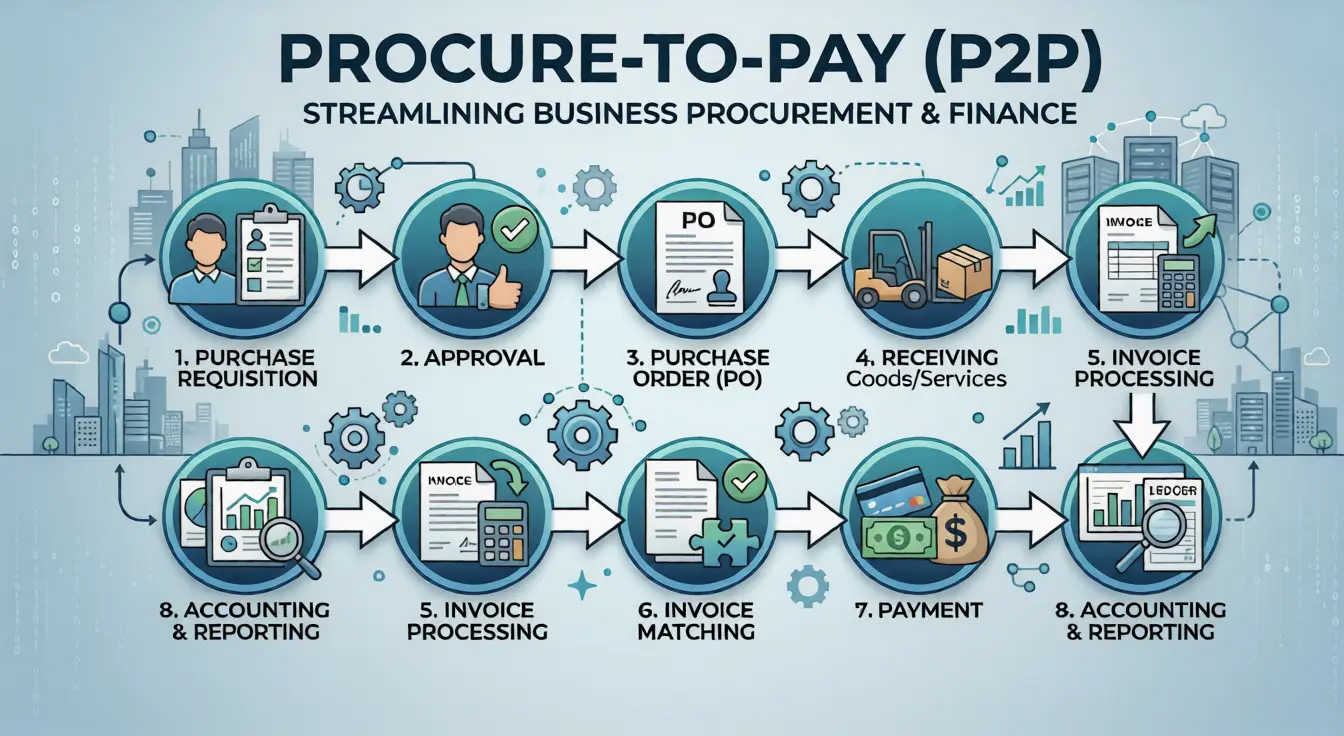
6. Convert the Approved Requisition Into a Purchase Order
Once approved, procurement develops the purchase order (PO) and forwards it to the supplier. Here, the company enters into the purchase on record.
This conversion step demonstrates the importance of the purchase requisition process, and it limits spending prior to the business entering the purchase order phase.
7. Track Order, Delivery, and Documentation
The order status, date of delivery and receipt are tracked by procurement. Once the supplier has delivered the goods or rendered the service, the company will enter the receipt and cross-tabulate it with the PO and the invoice management.
This is the last process that makes sure the audits are clean, payment processing is accurate, and inventory management is smooth.
The requisition workflow is not only highly managed to enhance purchasing but also to enhance planning, risk reduction, and ensure that businesses remain organized even when they grow.
Purchase Requisition vs. Purchase Order
A lot of businesses fail to distinguish between requisition and purchase order, but knowing the difference between requisition and purchase order will enable you to create a more streamlined and controlled procurement process. The two documents are in favor of buying, yet they have totally different functions.
A purchase requisition is an in-house request. It initiates the process of buying with a request. A purchase order, on the other hand, is an outside document. It approves the purchase and is sent to the vendor.
Key Differences Between Purchase Requisition and Purchase Order
1. Purpose
Approval is involved with a purchase requisition. It responds: Do we require this purchase?
Purchase order is commitment-oriented. It is a response to: We are purchasing this product from you.
2. Who Creates It
Employees or department teams usually create purchase requisitions.
The procurement or purchasing departments usually create purchase orders once they are approved.
3. Who Receives It
A purchase requisition remains within the company and is forwarded to managers, finance departments or purchasing officers.
A purchase order is an official buying document sent to the supplier or vendor.
4. Timing in the Procurement Cycle
First is the requisition. It initiates the approval process.
The purchase order is made later upon approval and selection of vendors.
5. Legal Value
Purchase requisition is not an obligation. It only requests permission.
The purchase order can impose a binding obligation on receiving the purchase order by the supplier.
Quick Example to Understand the Difference
Assume that an engineering team needs new laptops that should be used by the project manager.
- They make a purchase requisition to seek permission to have the laptops.
- Once approved, the procurement department sends a purchase order to the supplier and verifies the purchase.
This evident distinction justifies the need for businesses to know requisition vs purchase orders. Get these steps right, and you don’t have to make decisions in haste, spend wisely and establish a procurement system that can be relied upon over the long-term to ensure the business grows.
5 Reasons Why Your Business Needs a Formal PR Process
An expanding company cannot afford to use informal requests to purchase, random emails, and last-minute approvals. In the absence of a systematic system, expenses turn unpredictable, and procurement becomes a constant firefighting affair. Formal purchase requisition process brings about clarity, control and accountability in all departments.
In this list, I have listed five good reasons why your business must have a definite requisition workflow.
1. It Prevents Unauthorized Spending
When employees are put under pressure to deliver, they tend to buy things in a hurry. Those purchases can circumvent the budgets and company policies without an organized approval process.
The formal purchase requisition process entails that each request is reviewed, and the business does not make any commitment of money. This management safeguards your money flow and avoids the unjustifiable costs.
2. It Improves Budget Tracking and Financial Forecasting
Companies are making losses by failing to monitor future expenditure. The requisition system captures the need to purchase in the future, and this assists in budgeting for the teams with precision.
With all departments reporting purchase requisitions, your business gets a real-time view of the amount of money to be spent, anticipated purchases and the trend in expenditure.
3. It Creates Stronger Accountability Across Departments
The issues with procurements frequently occur due to the lack of responsibility towards a purchase. Teams shift blame to others for faulty items, deliveries, and misunderstandings with the suppliers.
A purchase requisition provides a record of:
- Who requested the purchase
- Why was the purchase needed
- Who approved it
- When the request was submitted
Such responsibility lowers the in-house conflicts and enhances decision-making.
4. It Helps Procurement Negotiate Better Pricing
Employees usually pay more when they purchase directly from the vendors. The procurement teams can only negotiate better deals when they handle purchases in a centralized manner. A procurement system that involves formal purchase requisition enables procurement teams to review their requests, integrate orders, compare suppliers, and achieve competitive prices. This not only enhances the relationships between vendors but also makes it cost-efficient in the long run.
5. It Reduces Errors, Delays, and Duplicate Orders
A lot of companies lose time and money due to incoherent requests sent by the employees. Other people rearrange things since they do not remember what they have already bought.
An effective purchase requisition process minimizes:
- duplicate purchasing
- incorrect quantities
- wrong specifications
- missing delivery deadlines
- unnecessary urgent orders
When a team has a regular process, buying will be a predictable and orderly process rather than a disorganized one.
A formal requisition system is not just beneficial in purchasing. It enhances business discipline, cost control, and enables scalable operations.
Common Pitfalls: Why Requisitions Get Rejected
Despite an effective purchasing workflow, managers and purchasing departments reject requisitions daily. Such rejections slow down and frustrate employees, and they also postpone significant projects. The issue is, in most instances, not the request but how it is posted.
Do not commit these frequent errors to obtain quicker approvals and reduce the number of delays.
1. Missing or Incomplete Information
Without important details, the procurement teams are unable to approve a request. The approver cannot be able to evaluate the item unless it has specifications, quantity, delivery date and the cost estimates of the item.
There should always be a clear description of the product being sold, the model numbers or the scope of the services being provided to be sure that the purchasing team is on the right track.
2. No Business Justification
When the request seems unnecessary or unclear, approvers reject requisitions. A mere need urgently fails to justify the purchase.
An effective requisition must provide a clear explanation of how the purchase will aid in operations, production, delivery of projects or customer needs.
3. Budget Not Available or Incorrect Cost Coding
However, finance departments will tend to turn down requisitions that the department budget can not meet. The requester may also choose a cost center that is not right or an account code that is not correct.
Before submission, ensure that the request is in line with the appropriate department budget and project category.
4. Duplicate Requests or Already Available Inventory
The rejected requisitions are usually due to the already existing inventory, or the requisition was ordered by another department.
Before making a new request, employees are expected to access the inventory systems and past purchase records. This practice will avoid unnecessary expenditures and enhance resource management within the company.
5. Vendor or Pricing Issues
The procurement teams might turn down the requisitions when the recommended vendor fails to comply with the requirements or when the price appears unrealistic.
Other vendors might not be certified, insured, taxed, or have a contract approved. In case the supplier fails to satisfy the company’s requirements, the procurement department should either decline or amend the request.
6. Request Violates Procurement Policy
In many organizations, there are policies like:
- minimum quote requirements
- preferred supplier lists
- spending limits by role
- restricted product categories
7. Poor Timing and Last-Minute Submissions
Rush orders tend to be denied as they cause strain without design. In case the request is received late, procurement might fail to deliver on time, particularly when it comes to the delivery of special equipment or imported goods.
Sophisticated groups place orders in good time to allow procurement to find vendors, negotiate prices, and control delivery times effectively.
8. Lack of Supporting Documents
Large purchases often require attachments such as:
- vendor quotes
- technical specifications
- scope of work documents
- project plans or drawings
- approval notes from stakeholders
Rejection of requisitions does not necessarily imply no. In most instances, it implies correcting the request and re-delivering it. The more employees are aware of these pitfalls, the better requisitions they make, minimize delays and enhance the efficiency of procurement throughout the organization.
Conclusion
The key to a good procurement system is a single easy step: that is, controlling what employees are asking before the expenditure process commences. The purchase requisition process can be well managed to ensure that your business makes purchases more quickly, uses less, and that all departments stay on budget.
By comprehending requisitions, teams will no longer indulge in hasty purchasing habits and will instead adhere to a distinct workflow that is based on accountability. You can have better cost visibility, clean audits, and better vendor management without reducing the day-to-day operations.
In case your company desires to scale purchases without losing financial control, then you are required to have a formal purchase requisition system. At Pro Procurement, we shield your budget, enhance planning and make sure that all actual business requirements back all purchasesFAQs
Is a purchase requisition a legal contract?
No, a purchase requisition is not a contract. It is an in-house request form that is used to obtain permission to buy. It has no binding effect on a supplier. Legal obligations can only be formed through a purchase order or a signed vendor contract.
Who approves a purchase requisition?
Appraisal is typically based on company policy and purchase value. A supervisor or department manager usually passes minor requests in the case of more valuable goods, which can be approved by finance departments, procurement officers or executives. An organized approval process will maintain spending within policy and budget.
Can a PR be created after the item is bought?
Yes, there are companies where it is possible to create a PR after purchase, but it is not advised. The post-purchase requisition lessens cost management and diminishes compliance in procurement. They are normally developed by the businesses in cases of emergency purchase or reimbursement tracking, but they must be reviewed by management.