Are you aiming to achieve big goals? Those companies need to check and balance their spending. If you take the source-to-pay process carelessly, it will lead to many problems for your business; costs can increase, suppliers might get irritated, and delays can happen as well.
At Pro Procurement, the goal is to make procurement simple and organized. With clear processes and practical experience, businesses can stop treating sourcing and payment as separate tasks. You don’t have to worry about sourcing to pay anymore because Pro Procurement will take full responsibility and provide your business with the most reliable services.
What is Source-to-Pay (S2P)?
Source-to-Pay (S2P), in simple words, is the process of buying goods for your business. It starts the moment someone says, “We need this,” and it ends when the supplier gets paid.
In many companies, sourcing and payments are handled by different teams that don’t always work closely together. That’s when confusion happens. S2P fixes that by connecting everything into one clear flow. From choosing the right supplier to approving the invoice, each step naturally moves into the next.
When the process is connected, businesses can actually see where their money is going. Suppliers know what to expect, and there are fewer chances for loss.
In practice, S2P isn’t just a formal business term. It’s a practical, organized way to handle buying and paying, without the stress, confusion, or surprises.
What is the End-to-End Source-to-Pay Process?
The end-to-end source-to-pay means the entire buying process inside a company, from the start where the teams ask for things that “We need it” until the payment is completed.
The procedure starts with finding out what is needed. After that, the team finds the best supplier, places an order with them, receives the goods, pays the bills, and clears the invoice. Nothing complicated, but it must be dealt with extra attention and requires a lot of time. The whole point is to avoid chaos.
When this process is handled the right way, every purchase:
- Gets approved before money is spent
- Matches the agreed contract
- Is properly recorded
- And gets paid without confusion or delay
Key Stages in the Source-to-Pay Process
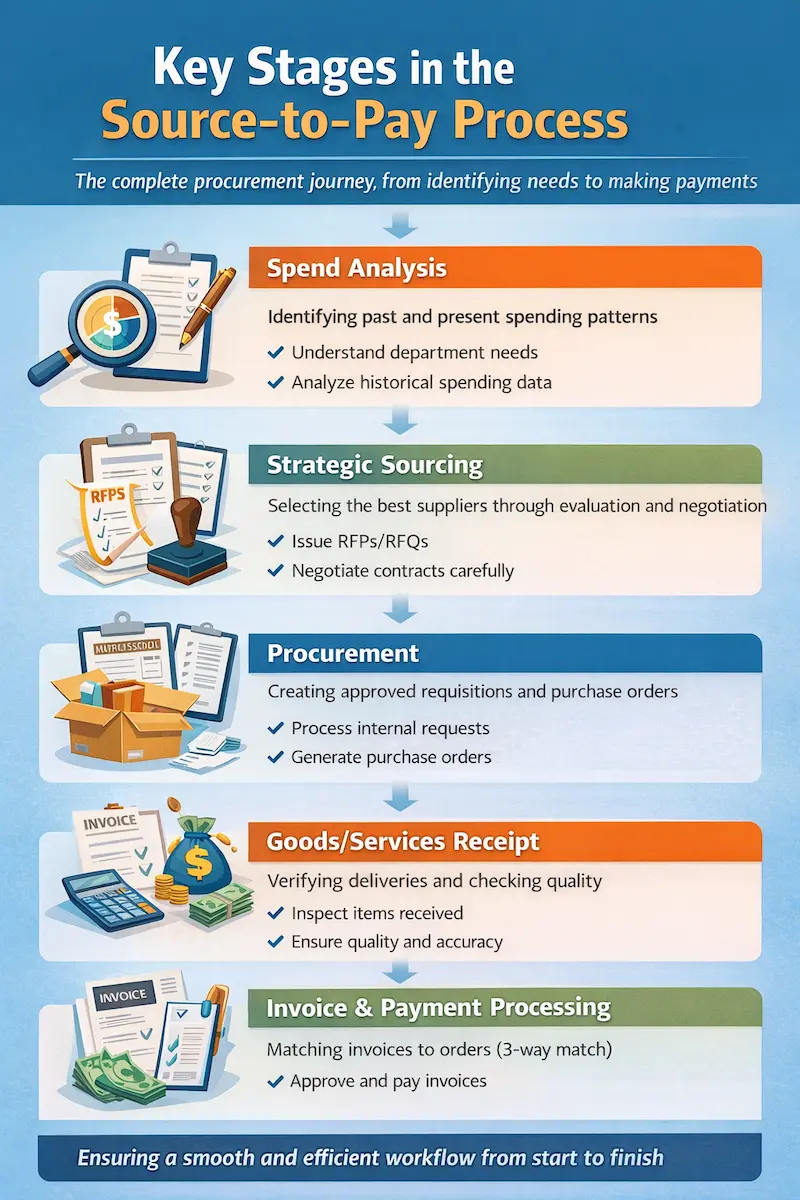
● Spend Analysis
Spend analysis is where everything really begins in the source-to-pay process. Before choosing suppliers or placing orders, a business needs to understand: where is the money actually going?
If you don’t have that clarity, procurement becomes reactive. Teams just respond to requests instead of planning. Spend analysis helps the business plan purchases more carefully, instead of rushing decisions.
Make sure you clearly understand what your business needs. Get a report from each department on which items are required, their quantities, and until when. When you are sure everything is clear, place an order to help prevent duplicate purchases and budget loss. Also, make sure that whatever is demanded is urgent and necessary.
Analyzing historical spending data
Next, businesses look at past spending. This is where patterns start to show. Certain items are being bought back and forth. Or too many suppliers are being used for the same product. This data will help you spot the actual requirements and overuse of budget resources.
When you combine clear planning with real spending data, procurement becomes more thoughtful and controlled, and budgets become more accurate. And long-term decisions become much easier to make.
● Strategic Sourcing
Strategic sourcing means selecting the best product for your business; it doesn’t mean you have to look for cheaper and fast-paced products, but the right one.
Many people think sourcing means “find the lowest price and move on.” If you just go for the lower price only, it may create problems later. Constantly checking on them might result in poor quality. Strategic sourcing is about thinking a little ahead. You want someone reliable who delivers what they promise.
Supplier identification
First, you look at your options. Who’s out there? Who can actually handle your requirements?
You check their background. Can they handle your order size? Are they financially stable? Do they have proper certifications? What do other clients say about them? It’s basic common sense. You don’t want surprises after signing the deal.
RFP/RFQ process
Then you ask suppliers to send proper proposals or quotes. Not just rough pricing over email, but structured details.
This keeps it fair and always compares their services, prices, and timeline in real-time instead of guessing. This makes comparison much easier.
Negotiation and selection
After reviewing the options, you negotiate. It doesn’t mean you compromise on quality for the price. It means you discuss the quality, timeline, and cost. In the end, you pick the supplier that feels solid, the one who gives good value and won’t create headaches later. When you do sourcing properly, you don’t just close a deal. You build a working relationship. Contract Management
After you select a supplier, the real work doesn’t stop there. Now comes the contract. And honestly, a contract is not just paperwork to file away. It’s the way that keeps both sides clear on what was promised. Contracts need to be handled properly, or else the small issues will turn into big risks, prices will get misunderstood, deliveries will be delayed, and then everyone will start to blame each other.
Drafting contracts
When creating the contract, everything should be written clearly. What’s the price? When will delivery happen? What level of service is expected? Who is responsible for what?
If something is not written properly, it creates confusion later. Payment terms should be clear. You might feel bored in the starting process, but it’ll save you from a lot of trouble in the end.
Compliance monitoring
Signing the contract is not the end. It’s actually where the concept begins. You need to check if the supplier is sticking to what was agreed. Are they delivering on time? Are they charging the right amount? Is the quality consistent? If no one checks, standards slowly drop. Regular follow-ups and simple performance reviews keep acts under control.
Risk management
Things don’t always go perfectly in business; delays, mistakes, and sometimes bigger problems come up. That’s why contracts are written carefully because we never know what will come next. Good contract management is about staying alert. It keeps problems small and protects your money. And it keeps the relationship with the supplier steady instead of stressful.
● Procurement (Requisition to Purchase Order)
This is the stage where a simple need turns into an official order. It usually starts when a department says, “We need this.” Instead of just emailing a supplier directly, they raise a purchase request in the system. This request clearly mentions what is needed, how much, the expected cost, and sometimes even the preferred supplier.
This step is important because it keeps everything recorded. Nothing should be bought without being recorded and visible within the company system.
Internal approvals
Before the product is ordered, the request needs approval. A manager or budget owner checks it, looks at the budget, checks if it makes sense, and confirms whether there is already a contract in place. This control step stops random or unnecessary spending. It makes sure money is used properly and in line with company plans.
Purchase order creation
After the request is approved, it eventually becomes the purchase order. The purchase order clearly mentions the price, delivery date, payment terms, and other agreed details. It is then sent to the supplier as an official confirmation.
Now the terms are clear. The supplier knows what to deliver, and the company knows what to expect. There will be no confusion later about price or quantity. This step makes the deal official and keeps things for proper official records.
● Goods/Services Receipt
When the supplier delivers the goods or completes the service, the job is not finished yet. You don’t just pay immediately. First, you check the quality of the goods. This step is about making sure you actually received what you ordered.
Verification process
The team compares what arrived with what was written in the purchase order. Are the quantities correct? Does the description match? And is it the right item?
For physical goods, they may check packaging and labels. For services, they may review reports or confirm that the agreed work has been completed. It’s a simple but important check.
Quality control
It’s not just about quantity. Quality matters too.
- Are the items damaged?
- Do they meet the expected standard?
- Is the service done properly?
One should report the issue as soon as it occurs because it is easier to resolve issues early than to fix larger problems later. When goods and services are checked properly and documented correctly, then invoice matching becomes easy. The company avoids paying for wrong or incomplete deliveries. This step helps everyone stay aligned.
● Invoice Processing
This is the stage where many companies make small but costly mistakes. A simple invoice error can cause overpayments or confusion. So before paying, the invoice needs to be checked properly. You don’t just approve it because it arrived in your inbox.
Invoice matching (3-way match)
The invoice is checked against two other documents, the purchase order and the delivery receipt.
It’s a basic check:
- Did we order this?
- Did we receive it?
- Is the price the same as agreed?
If all three match, the invoice moves ahead. If not, it stops there. This one habit saves a lot of money over time.
Discrepancy resolution
If the item looks off, such as the wrong price or wrong quantity, the invoice is put on hold. Then the issue is investigated. It could be a typing mistake. The supplier may have billed incorrectly. The issue gets sorted before any money is released.
This step slows down the process, but it protects the company from extra costs and paying twice for the same item. When this part is automated, it becomes easier.
Payment Processing
This is the final step. It’s when the company actually pays the supplier. By now, all should already be checked that the supplier was selected properly, the order was approved, the goods were received, and the invoice was verified. Payment is just the last confirmation.
Payment authorization
Before sending money, approvals are checked again. The system confirms the invoice was matched and approved. Then, authorized staff review the payment list. This helps catch duplicate payments. It’s a simple control, but it prevents big financial mistakes.
Financial reconciliation
After payment is made, it’s recorded in the system. Finance makes sure the numbers match the purchase order, invoice, and payment record. If items don’t line up, they fix it quickly. This keeps reports clean and avoids trouble during audits. Paying suppliers on time may seem like a small act, but it matters. When you pay correctly and without delays, suppliers trust you more. And that makes future business much easier.
Source-to-Pay vs Procure-to-Pay
To get a better idea, here’s the difference between source-to-pay and procure-to-pay. Most of the time, buyers get confused about this.
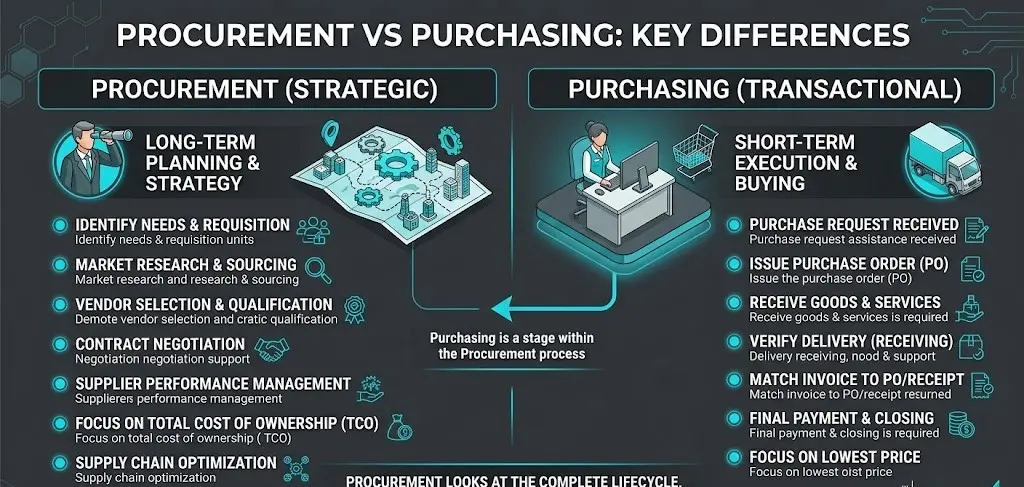
Procure-to-Pay is basically the buying part. Someone raises a request, it gets approved, an order is placed, an invoice comes in, and then payment is made.
Source-to-Pay is broader than that. It starts earlier, before any order is placed. It includes finding the supplier, comparing options, negotiating prices, and setting up contracts.
What is a Source-to-Pay System?
A source-to-pay system is just a tool that keeps everything in one place. Instead of running sourcing in Excel, contracts in folders, approvals on email, and invoices somewhere else, it brings it all together. You can log in and see what’s been requested, what’s approved, what’s pending, and what’s paid. No chasing ten different people to understand what’s happening.
With a system like this, you can:
- See which suppliers are doing well (and which aren’t)
- Check spending without waiting for month-end reports
- Approve requests online
- Make sure people are following the process
At Pro Procurement, the goal isn’t to complicate the process. It’s to make procurement less scattered and more under control.

Benefits of Implementing an S2P System
When all items run through one system, it feels easier to manage. You’re not constantly asking, “Where is this?” or “Who approved that?”
● Better Spend Visibility
You can actually see where the money is going, not an estimate or a guess—the real numbers. If one team is overspending, it shows. If you’re using too many suppliers for the same purpose, you’ll notice it.
● Cost Reduction
Saving money becomes more practical. You can combine orders and negotiate properly. Stop random buying outside contracts. It’s not about cutting corners, it’s about being smarter.
● Process Efficiency
Let’s be honest, manual processes slow down the process. Emails get missed, papers sit on desks, and invoices wait for signatures.
A system moves approvals automatically. It matches invoices with purchase orders. It keeps records without extra effort. Less back and forth and fewer small mistakes.
● Improved Compliance
When the system forces the right steps, people follow them, no skipping approvals, no side deals. That makes audits less painful and reduces risk.
● Stronger Supplier Relationships
Suppliers care about clarity and getting paid on time. When orders are clear, and payments aren’t delayed, they trust you more. And when trust builds, future negotiations become easier.
At the end of the day, an S2P system isn’t about fancy software. It’s just about keeping your buying process organized so it doesn’t turn into a mess.
Real-World Examples of S2P in Action
Let’s suppose each department in a company is buying from different suppliers. Marketing uses one vendor, operations uses another, and finance handles invoices separately. No one really sees the full picture. What happens?
- Approvals get stuck
- Invoices sit for days
- Suppliers keep calling for payment updates
Now put a proper S2P process in place. All suppliers are registered in one system, contracts are stored properly, invoices are checked automatically against orders, and approvals move step by step without chasing people. Suddenly, the process moves faster, fewer mistakes happen, reports are easier to pull, and cash flow is easier to manage.
Common Challenges in the Source-to-Pay Process
Lack of Data Visibility
If procurement uses one tool, it becomes difficult for departments to access the same information. Then, basic questions become hard to answer.
- How much are we spending overall?
- Are we over budget?
- Which supplier costs us the most?
When data is unclear, then decisions are merely based on assumptions.
Manual Processes
When you think about email approvals, Excel tracking, and paper invoices. At first, it feels manageable. But as volume increases, it starts slipping. Someone forgot to check the price. An invoice gets paid twice, and the report takes days to prepare.
In the start, it feels easier, but with time, you start to uncover unexpected issues.
Supplier Risk
If suppliers aren’t properly checked at the beginning, you find out the hard way. You will be facing different problems, like late deliveries, quality complaints, and arguments over contract terms.
When monitoring is not properly done and doesn’t start on time, then it starts to get complicated and complex.
Resistance to Change
People get used to their way of working. When a new system is introduced, some will say, “The old way worked fine.” Even if it didn’t, if training is rushed or unclear, adoption slows down. Then the system doesn’t deliver results. Again, if you detect and sort it out at the start, it will get easier to proceed.
How to Optimize Your End-to-End Source-to-Pay Process
To know the overall process, be honest and passionate about knowing facts, and to understand how exactly the process is moving forward. You’ll usually find small cracks.
- Where are approvals getting delayed?
- Are people bypassing the process?
- Are invoices being checked properly?
Fix approvals first and make the flow clear. Everyone should know who approves what, and then organize supplier data. To avoid controversy, one must keep items organized and in one place. And train your team properly because employees get negligent in their work only when they don’t know how to do it.
Is S2P Right for Your Business?
If your procurement feels messy, S2P is worth looking at.
- If invoices get delayed.
- If approvals take too long.
- If no one can clearly explain the total spending.
Growing companies feel it more. As transactions increase, manual tracking tends to stop working, and decisions slow down.
A structured S2P setup brings it back under control. You see what’s being spent, who approved what, and if suppliers get paid on time. It doesn’t make procurement perfect, but it makes it manageable, and that alone makes a big difference.
Conclusion
The source to pay is not complicated. It just means handling the whole buying process properly, from choosing a supplier to paying the final invoice. When all is connected, it stops feeling messy. You know:
- What you are buying
- Who approved it
- How much are you spending
- When payments are going out
If sourcing, purchasing, and finance all work separately, problems happen. When they work together in one system, it makes things clear and manageable.
Frequently Asked Questions
1. What is the difference between source-to-pay and procure-to-pay?
Source-to-pay covers all stages. It starts with finding suppliers and setting contracts, then it moves to buying, and at last to payment. Procure-to-pay only covers the buying and paying part.
2. Why is a source-to-pay system important?
Because without it, stages get scattered if different teams use different tools, and information sits in different places. No one sees the full picture of what’s happening. A source-to-pay system keeps all in one flow. It reduces errors, helps track spending, and keeps approvals clear and simple.
3. Can small and mid-sized businesses benefit from S2P?
Yes, anyone can face spending problems; one doesn’t need to be on a specified scale. Even small firms, if left unchecked, will eventually start to deal with missing out on invoices, be unclear about their budgets, and experience delays in approvals.
4. How long does it take to implement an S2P process?
There’s no fixed answer. If the company is small, it can be faster. If the company is large with many suppliers, it takes longer. It also depends on how the team tackles the issue and is prepared to solve any problem at any time. Planning and training make a big difference, and most companies do it step by step.
5. Does S2P help improve supplier relationships?
Yes, it helps improve supplier relationships. When there are no delays in payments, and all is sorted out and going smoothly, then the supplier starts to get comfortable working with you. There are fewer arguments and less confusion.